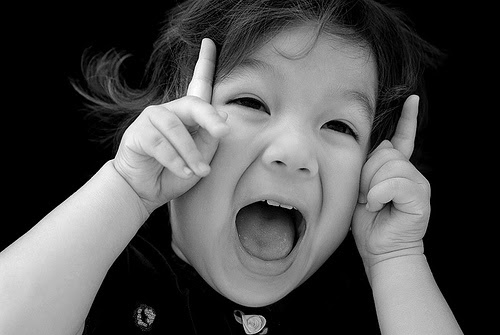
"An educator has an ethical responsibility to listen, to learn about this child's way of being a child, and to learn from the child's way of living and moving in the world” (S.Kind, personal communication, October 21st, 2010).
Our roles as educators is ever evolving. To be an effective, responsive teacher I must question my place in the world as an educator, feminist, advocate and scholar. I must question the ideas of universal truths that surround child development, and be open to other ways of making meaning.
It is important to engage in as Kummen, states, “Disrupting developmental theory to make room for other ways of knowing/understanding children as: unknown, complex and diverse human beings-not as a known and definable group”(personal communication, 2010).
In viewing children as individuals in all of their complexities we have a role and responsibility in the ethics of our encounter with each individual child. The ethics of the encounter refers to the work of Levinas http://www.levinas.sdsu.edu/ and the idea of the 'face-to- face relationship' interaction. Levinas challenges us to be 'face-to-face' with the 'Other' (this referring to the child) and to let go of the “single stories” that we have constructed based on the normative and regulative models of children and child development (Adichie, 2009). In the moment of this face-to-face interaction with children we must shed our cloaks as “experts” and interact with the Other without knowing them, or where their place is in the world (Cannella, 1999, p. 39 ). Sharon Todd (2004), describes this encounter as:
“...it is only when we recognize and embrace our ignorance that we can truly begin to learn from the stories that others have to tell” (Todd, 2004, p.350).
This is difficult and often uncomfortable as it calls on us as educators to reconsider our beliefs and values and makes us vulnerable. It challenges us to disrupt our thinking but it leads the way for change and understanding. The educator then begins to ask-'What can I learn from this child'?
Ethics should be present in all of our interactions with children. When communicating with children with and without disabilities it may take some time to gain trust, and learn individual and preferred ways of communicating. By taking our time, and engaging in equal conversation we will engage in the face-face relationships with children in ethical and respectful ways.
“Listening that is generated by doubt, by uncertainty...[it] is not easy. It requires a deep awareness and at the same time a suspension of our judgements and above all our prejudices; it requires openness to change” ( Rinaldi, 2006, p.65)
References
Adichie, C. (Speaker). (2009). The danger of a single story [Online Video]. New York: Ted Conference LLC. Retrieved November 28, 2010, from http://www.ted.com/talks/chimamanda_adichie_the_danger_of_a_single_story.html
Adichie, C. (Speaker). (2009). The danger of a single story [Online Video]. New York: Ted Conference LLC. Retrieved November 28, 2010, from http://www.ted.com/talks/chimamanda_adichie_the_danger_of_a_single_story.html
Cannella, G.S. (1999) The scientific discourse of education: Predetermining the lives of others- Focault, education and children. Contemporary Issues in Early Childhood, 1, (1), 36-44. Retrieved from: http://moodle.capilanou.ca/file.php/1397/Foucault_education_children.pdf
Mac Naughton, G. (2005). Doing Foucault in early childhood studies: Applying poststructural ideas. New York: Routledge.
Rinaldi, C. (2006). In Dialogue with Reggio Emilia Listening , researching and learning. New York: Routledge.
Todd, S. (2004). Teaching with ignorance:Questions of social justice, empathy, and responsible community. Interchange, 35, (3), 337- 352. DOI: 10.1007/BF02698882